
The question we hear most from Devon businesses considering commercial solar is a simple one: is it worth it? Not in principle, not as an environmental statement, but financially. What does it cost, what does it return, and how long before the numbers work in our favour?
We have carried out commercial solar installations across Devon and the South West, and we have real return figures from real Devon installations to share. Here is the honest commercial case.
The Torquay Golf Club installation: 22% annual ROI
The Torquay Golf Club installation: 22% annual ROI
Our most-cited commercial installation in Devon is at Torquay Golf Club on the English Riviera. The system was designed around the club’s specific daytime electricity consumption profile, high during operating hours, with equipment running consistently through the day.
The installation delivers a 22% annual return on investment. That is not an estimate or a projection, it is the measured return from the system in operation. At 22% per year, the installation has paid back in full and continues to generate return.
For context: a 22% annual ROI from a capital investment is significantly above what most businesses achieve from alternative uses of the same capital. The FTSE 100 has returned an average of around 8% per year over the long term. A commercial solar installation with consistent daytime electricity consumption and a suitable roof is, for many Devon businesses, one of the most financially effective investments available.
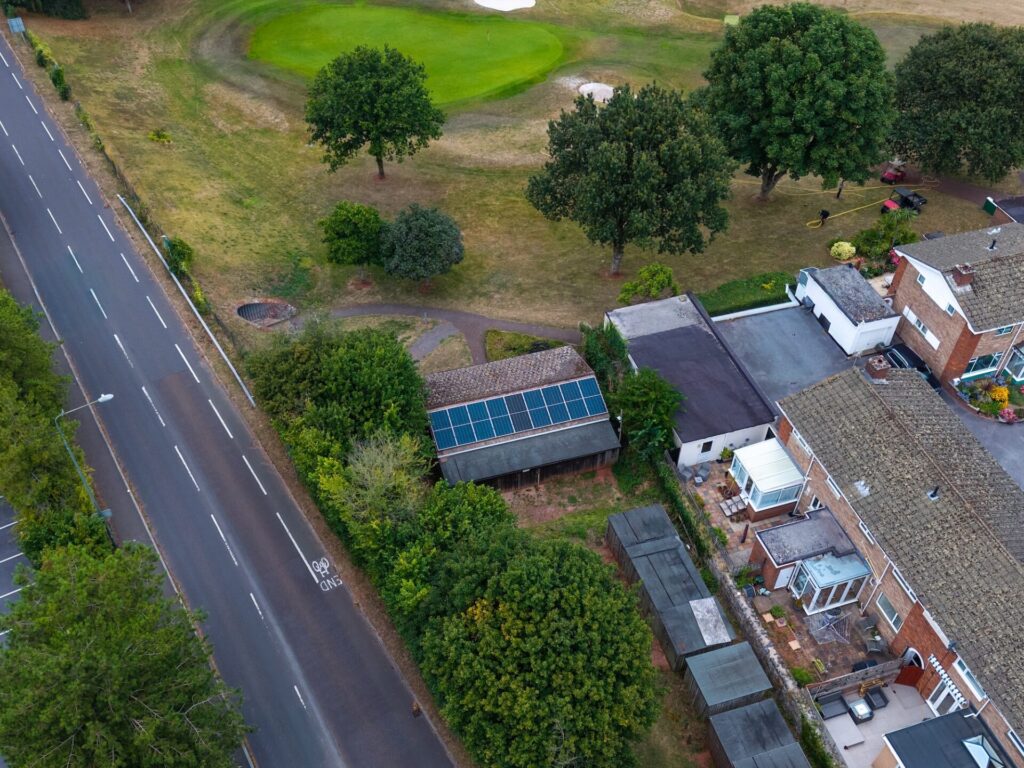

The Newton Abbot 47.52kWp installation
Our 47.52kWp commercial installation at a Newton Abbot commercial property demonstrates what a larger system looks like on a commercial flat or low-pitch roof. At 47kWp, this is a system generating around 40,000 to 45,000 kWh per year depending on conditions, the equivalent of powering around 15 average UK homes.
For a commercial premises consuming that electricity for operations, lighting, HVAC, and equipment, the self-consumption value at 26p per kWh is around £10,400 to £11,700 per year in direct electricity cost reduction. Surplus exported to the grid earns additional income through the Smart Export Guarantee.
The Annual Investment Allowance – the part most businesses miss
The single most important financial lever for commercial solar in 2026 is the Annual Investment Allowance. It allows the full cost of a qualifying capital investment to be deducted from taxable business profits in the year of purchase.
For a commercial solar installation costing £60,000, a business paying corporation tax at 25% can deduct the full £60,000 from taxable profits in year one. The tax saving is £15,000, reducing the effective net cost of the installation to £45,000. This is a genuine cash benefit in year one, not a depreciation schedule spread over years.
The AIA is not a solar-specific scheme. It applies to qualifying plant and machinery. Solar panels and inverters qualify. The current AIA annual limit is £1 million, well above the cost of any standard commercial solar installation.
Combined with electricity cost savings and SEG export income, the AIA fundamentally changes the payback calculation for commercial solar. Most commercial installations with reasonable daytime electricity consumption and AIA available pay back in full within 5 to 8 years, with 15 to 20 years of further generation after that.
What makes a Devon business a strong commercial solar candidate
For rural Mid Devon properties with higher than average electricity Not every commercial property is equally suited to solar. The businesses that get the strongest returns share several characteristics:
- High daytime electricity consumption: offices, manufacturing, retail, leisure, hospitality. The more electricity your business uses during daylight hours, the more of your solar generation you self-consume at full grid rate value rather than exporting at the lower SEG rate.
- South, south-east, or south-west facing roof space: the orientation and pitch of your roof determines annual generation. A large south-facing flat or low-pitch commercial roof with minimal shading is an excellent solar candidate.
- Ownership or long lease: commercial solar makes most sense where you will be in the building long enough to benefit from the generation. A minimum 10-year remaining lease is a reasonable threshold.
- Profitable business paying corporation tax: the AIA benefit is most valuable to businesses with taxable profits to offset. A loss-making business cannot access the year-one tax relief, which changes the payback calculation significantly.

Types of Devon commercial premises we install for
We carry out commercial solar installations across a range of Devon business types:
Golf clubs & leisure venues
High daytime electricity demand, large south-facing roof space on clubhouses and leisure buildings, and consistent year-round operation make golf clubs and leisure venues strong commercial solar candidates. The Torquay Golf Club installation is the clearest demonstration of this.
Industrial and manufacturing
Factory units, production facilities, and industrial buildings on Devon’s trading estates typically have large roof areas, high daytime electrical loads, and predictable consumption patterns that align well with solar generation. Many are also eligible for enhanced AIA treatment.
Agricultural & Equestrian
Farm buildings and stables with south-facing roof space are among the strongest commercial solar investments available. Large roof areas, agricultural permitted development (no planning application in most cases), and high daytime electricity consumption from farm equipment combine to deliver strong returns.
Hotels and hospitality
Devon’s significant hospitality sector with hotels, holiday parks, restaurants, and event venues, has consistent daytime electricity demand from kitchens, HVAC, laundry, and guest facilities. For year-round hospitality venues, the combination of high summer generation and consistent consumption makes the solar case strong.
Offices and professional services
Exeter, Newton Abbot, Torbay, and Plymouth all have active office markets. Office buildings with south-facing roofs and a standard working-hours occupancy pattern, consistent 9am to 5pm demand for lighting, computers, and HVAC, are good solar candidates.
Commercial solar and battery storage
For commercial premises with high evening or weekend electricity demand, hospitality, leisure, event venues, battery storage allows surplus daytime generation to be used outside solar hours rather than exported. For standard office and industrial premises where demand aligns with solar generation hours, battery storage is less critical and the payback case is primarily built on daytime self-consumption.
We assess battery storage as part of every commercial survey and recommend it only where the consumption profile justifies the additional investment.

Get a commercial solar survey in Devon
We carry out free commercial solar surveys across Devon. Call 01364 654271 or contact us online
MCS Accredited | NICEIC Approved | Newton Abbot, Devon | 20 miles from Dartmouth
Written by Lee Bullingham, Solar PV Installation Lead, M&E Contrax Renewables. Published September 2026.
Frequently asked questions
What is the typical ROI for commercial solar panels in Devon?
For a Devon business with good daytime electricity consumption and AIA available, total returns including electricity savings, SEG income, and year-one tax relief typically make commercial solar one of the highest-returning capital investments available. The Torquay Golf Club installation delivers 22% annual ROI. Most commercial installations with reasonable consumption profiles pay back in full within 5 to 8 years.
Does commercial solar qualify for the Annual Investment Allowance?
Yes. Solar panels and inverters are qualifying plant and machinery under the AIA. The full cost of a commercial solar installation can be deducted from taxable business profits in the year of purchase. At 25% corporation tax, this reduces the effective net cost by a quarter in year one. The current AIA limit is £1 million per year.
Do you need planning permission for commercial solar panels in Devon?
For most commercial buildings, standard rooftop solar falls under permitted development. Agricultural buildings qualify under agricultural permitted development in most cases. Listed buildings and conservation area properties require a planning check. We confirm the planning position for every Devon commercial property at the survey stage.
How large a commercial solar system do we need?
System size should be matched to your electricity consumption and roof space, not maximised for its own sake. We design commercial systems from actual site consumption data rather than generic recommendations. For a typical Devon office or industrial unit, 20 to 50kWp covers a significant proportion of daytime demand. Larger premises and agricultural buildings may justify 100kWp or more.


